Buying Vacant Land in Victoria: Zoning,
Easements, Covenants and Essential Legal Checks
One of the First goal to achieve to build your dream
home is to be able to buy a vacant land. However, having to be bought a plot of
land does not mean that you can build whatever you wish. Planning regulations, zoning
restrictions, easements, and restrictive covenants can affect the use and
development of the land area you bought.
You should understand these legal requirements, before
you purchase your vacant land in Victoria region or Melbourne. These legal
requirements will aid you in avoiding many unfortunate unexpected costs.
Furthermore, Its much better to make an informed decision rather than hastily making
an uninformed one.
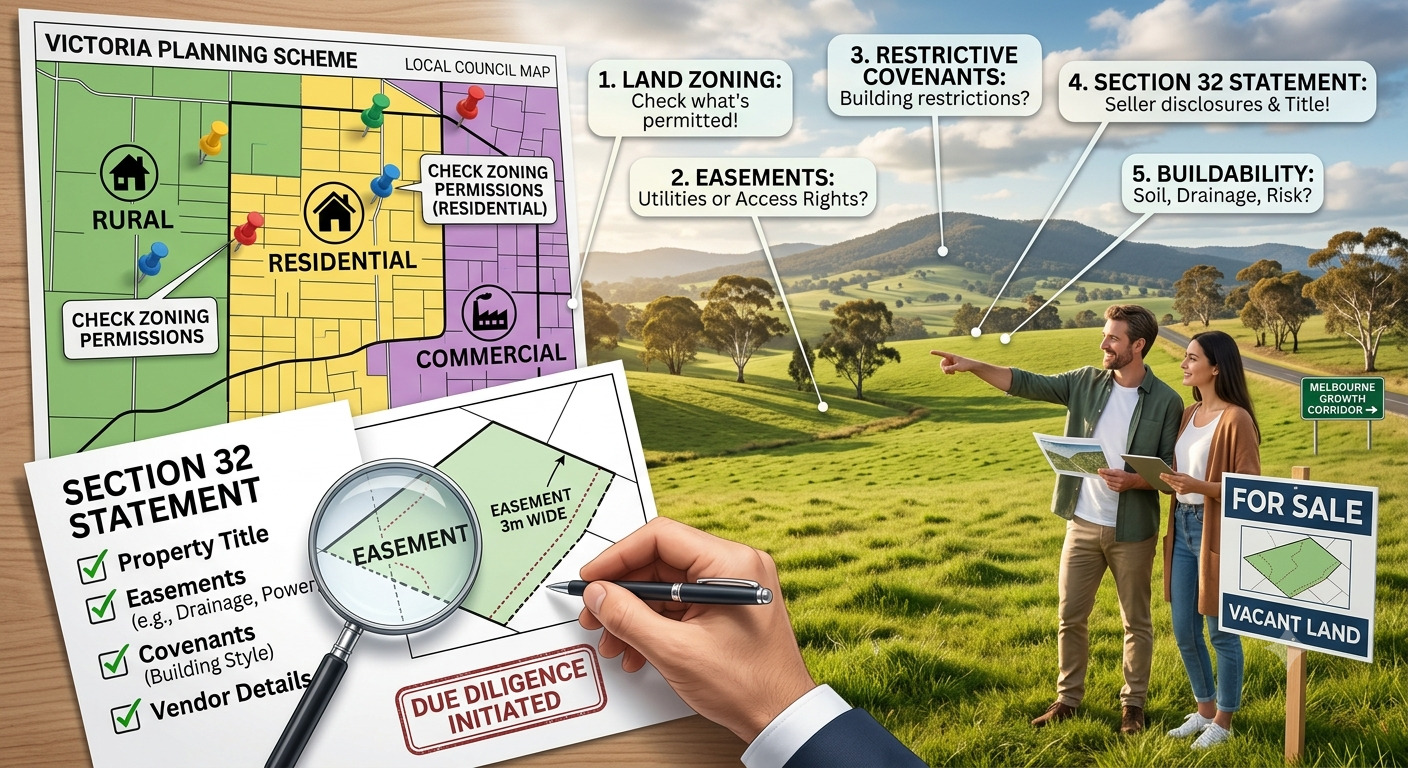
1. Checking the Land Zoning
This helps you understand what type of
development is permitted and how this property can legally be used. Different
zones have different requirements like, Residential, industrial, commercial or
rural zones.
If we take an example like, if you own a
residential land, it does not guarantee that you can get approval for a duplex.
Hindrances like local council requirements may be present. In this case, you
can contact the local council, and you can just ask them if what you are
planning is feasible or not. Other than that, buyers can use the Victorian governments
mapping tool and check the relevant planning overlays.
2. Understanding
the Easements on Property
Easement helps in giving you some certain legal rights
over a few parts of your property like utilities, drainage or access. It can be
dependent on various factors like, where you construct a house, driveway, or swimming
pool. Before buying your plot, you can have your conveyer review the related
documents for more clarity and your needs.
3. Checking for Restrictive Covenants
It is a legal restriction that can limit how your land
is being developed or used. Covenants may restrict certain activities or impose
requirements relating to building materials and design.
These restrictions are essential, if you are intending
to use the land for investments purposes.
Check the property's title documents for registered covenants and obtain legal advice if a restriction conflicts with your plans.
4. Reviewing the Section 32 Statement and
Property Title
The seller generally provides a Section 32 vendor's
statement In Victoria, before the contract is signed by the buyer.
This statement provides important information about
the property, including relevant title details, encumbrances and other
prescribed matters.
A property title search can help identify registered owners, easements, mortgages, caveats and other interests. Your conveyancer or property lawyer should review these documents alongside the contract of sale before you commit.
5. Investigating Buildability and
Additional Restrictions
Legal checks alone cannot confirm whether land is
physically suitable for construction. Before purchasing, you should investigate
these factors.
- Planning
overlays
- Utilities
- Soil
and drainage
- Access
and boundaries
- Environmental
risks.
These checks are particularly valuable when purchasing vacant land in Melbourne's growth corridors or regional Victoria.
Conclusion
Buying vacant land in Victoria involves more than
choosing a location and agreeing on a price. Zoning, easements, restrictive
covenants, title restrictions and site conditions can all affect your building
plans and budget.
Before purchasing land in Melbourne or elsewhere in
Victoria, conduct thorough due diligence and seek professional advice.
Understanding what you can legally and practically do with the land before
settlement can help prevent costly surprises.
Share this article: